Introduction
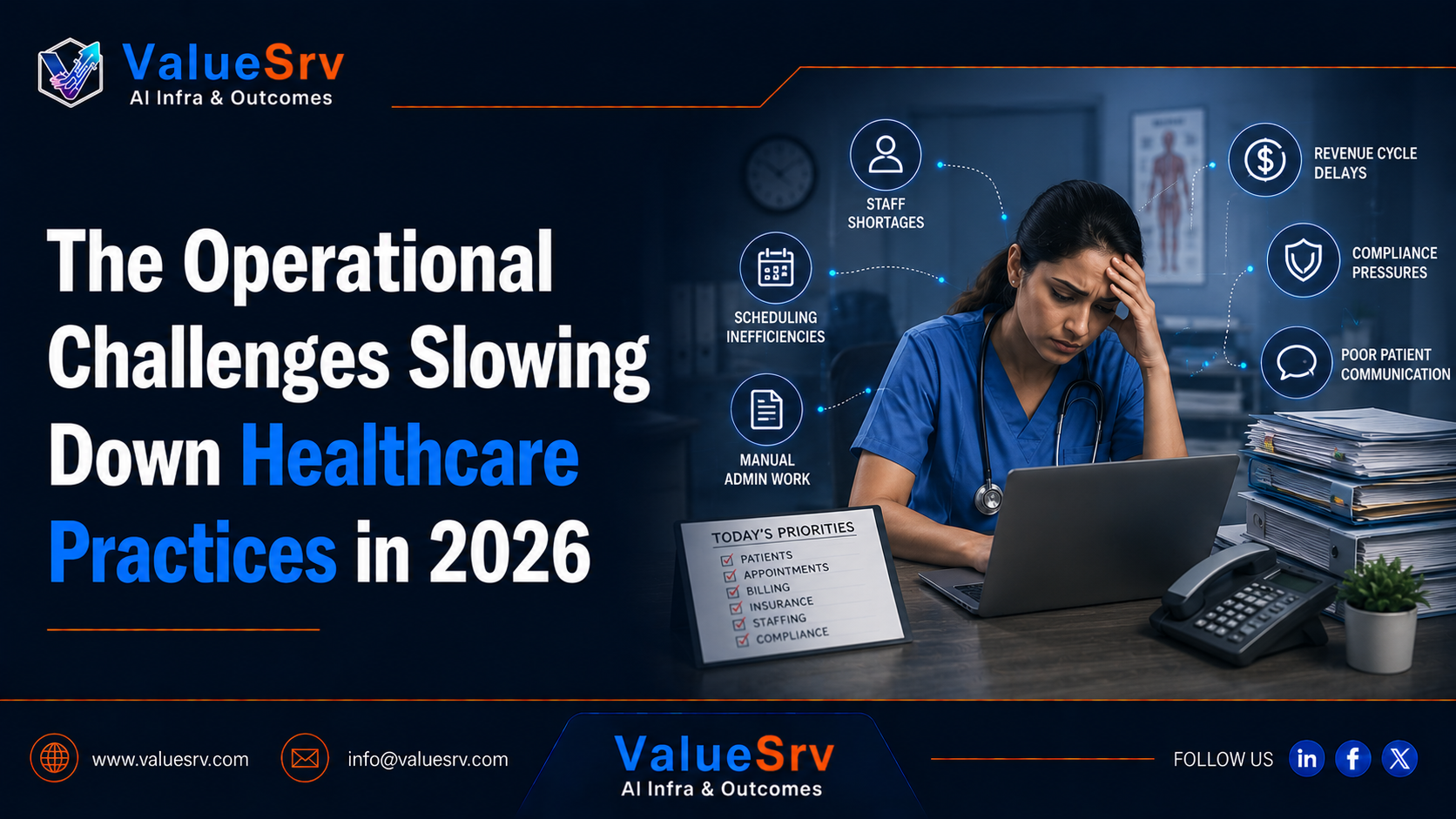
It is not unusual for clinics and service firms to struggle with their operations. However, in most cases, this is not because of a lack of clients. Instead, it is because their processes are overly manual for them to handle growing demand efficiently.
As you grow, you expect more success. More clients translate into higher revenues. However, if you do not have proper systems in place, this means more phone calls, more follow-ups, more scheduling, more documentation, and more strain on already overburdened teams.
In 2026, workflow automation for service firms is a necessity, not a productivity upgrade.
What Is Admin Overload?
Overworked administrators cause different challenges in different businesses. However, the root problems tend to be similar in almost all clinics and service firms.
In Clinics
In most cases, clinics encounter issues such as:
- Missed patient calls
- Delayed appointment scheduling
- Manual patient reminder calls
- Repeated patient form collection
- Scattered patient communication via phone calls, emails, and messaging platforms.
In Service Firms
On the other hand, service firms face issues such as:
- Delays in responding to client inquiries.
- Manually following up on proposals with clients.
- Repeated onboarding steps.
- Disconnected CRM updates.
- Confused team members with unclear roles.
All the above challenges point to one thing: admin overload. This is the silent killer that hinders clinics and service firms from scaling their operations.
Admin overload not only creates work for employees. It also impacts your customers' experience, revenue generation, and your ability to scale your business.
How Manual Workflows Hinder Scaling
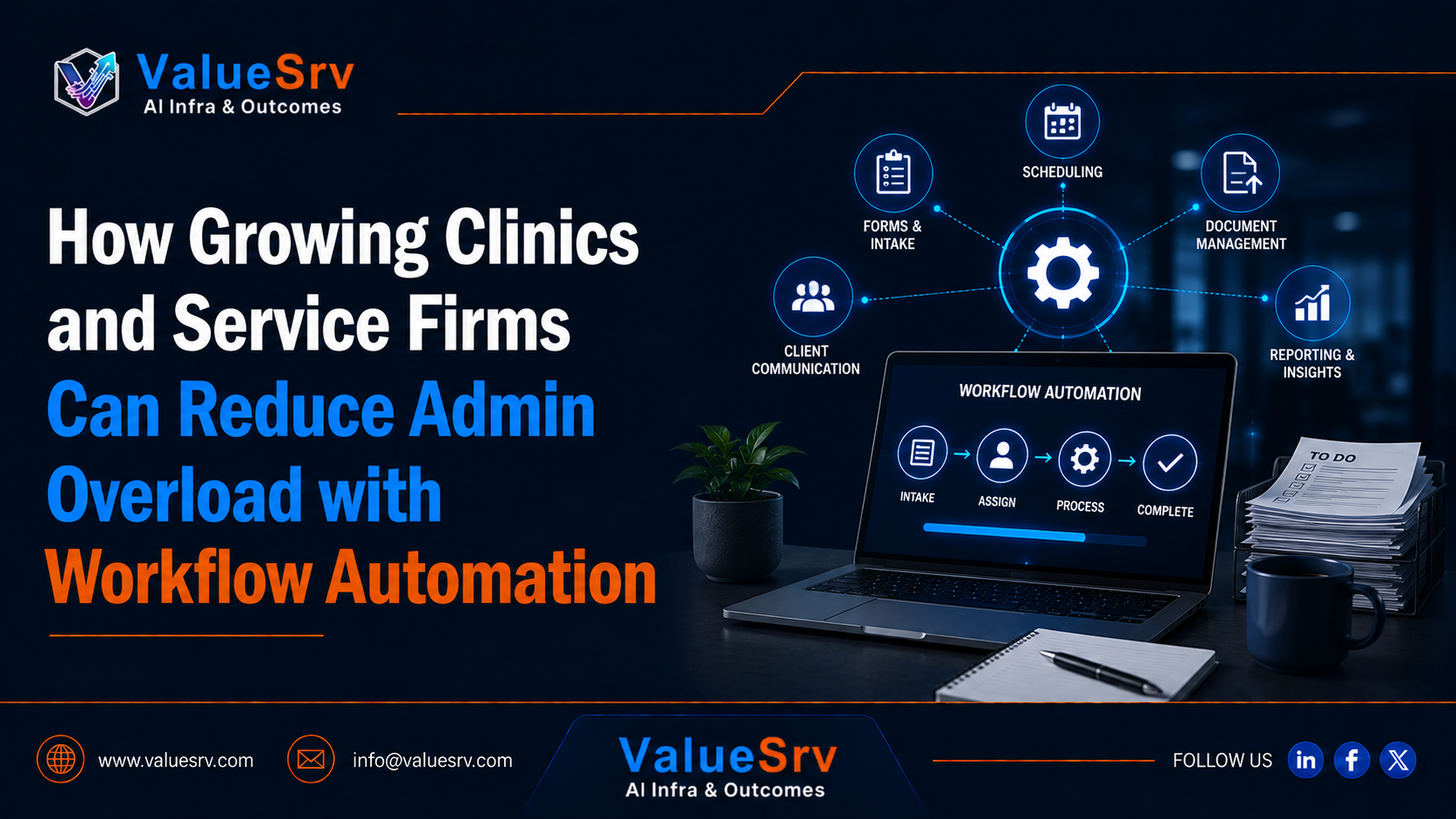
When workflows remain highly manual, they tend to develop bottlenecks that choke your business. At each step, your teams must remember to:
- Check for something
- Send an email
- Update information
- Escalate requests
- Contact relevant people
When you have a few clients or patients, this might work fine. However, when your demand grows, this process starts failing. Team members spend more time performing repetitive tasks and communicating manually than handling value-added activities.
In essence, manual workflows prevent you from growing without adding more administrators. For instance:
Inquiry and Lead Response
Prospects who inquire about your services or products may wait for hours or even days before getting any response. This is particularly problematic if the leads are high-intent.
Service-based qualification questions cannot route leads to the appropriate team members automatically. As such, there is always a delay in reaching out to prospects.
Appointment and Consultation Scheduling
Your teams have to spend several hours every week coordinating appointments. Even if you have a calendar, your teams have to communicate frequently to find open slots.
Appointment scheduling automation ensures that you allocate available slots to prospects without having to waste time coordinating with others.
Intake and Onboarding
For clinics, this involves collecting patient data such as contact details, health history, consent forms, payment options, and other relevant information. Unfortunately, most clinics still rely on manual processes, thereby making it difficult to schedule consultations effectively.
For service firms, this involves collecting client data, project requirements, and other relevant information. You need to provide clients with checklists and other documents for them to respond effectively.
Follow-Up and Engagement Workflows
A significant proportion of your lost business comes from inconsistent follow-ups. Your teams might forget to send proposal reminders, schedule consultation times, and follow up on missed opportunities.
Internal Task Visibility
Task assignments, tracking, and escalations should happen automatically. If you leave them to human memory, your teams will waste lots of time trying to coordinate manually.
Mistake Businesses Make When Trying to Automate Their Operations
Some clinics and service firms already have multiple tools at their disposal. These include CRMs, email systems, appointment scheduling systems, intake forms, and task management apps. Nonetheless, they still struggle with admin overload and other related challenges.
The problem with using multiple platforms is that most of them are not connected. Therefore, the data you enter remains disconnected, causing various bottlenecks that affect efficiency negatively.
Using more tools is not the solution to your challenges. Instead, your business needs a connected workflow infrastructure.
That is where ValueSrv operates differently. Unlike most vendors who deploy isolated tools, ValueSrv develops customized automation infrastructure for every business. In particular, we design inquiry and lead response, intake workflows, appointment scheduling, engagement workflows, CRM integrations, and reporting dashboards into one coherent system.
Features to Consider When Seeking a Workflow Automation Partner
If you want to leverage automation in your business, your vendor should have deep industry knowledge and experience. They should be able to understand your current operations and design workflows around them.
Additionally, look for a partner who can customize your workflows and integrate different tools into one cohesive system. The best automation vendors are those who understand your journey and build connected systems that align with your long-term goals.
Other features to consider include:
- Customized workflow design
- Customized CRM integrations
- Intake workflows
- Communication workflows
- Reporting dashboards
- Human escalation procedures for complex cases
Conclusion
Administrative challenges are some of the most common barriers to growth for clinics and service firms. However, these issues arise from poorly designed workflows and disconnected tools.
Businesses that implement healthcare workflow automation and clinic automation systems will be able to scale more easily, serve their clients better, and operate more effectively in the future.